SNR Fresh Plays: Febru-late Than Never? + Deduction Games and Avoiding Corruption
Published 7 months ago • 9 min read
Fresh Plays
I love that my local game convention (Strategicon-Orccon) falls on my birthday weekend in February. Not only do I get the opportunity to offload a bunch of games via the virtual flea market, but since it's my birthday, I'm basically immune to feeling guilty when I end up bringing home a "few" goodies for myself. Often, I'll get the new games home and be all excited to try them, but I have some several games I've picked up from a year or more ago, which I still haven't played. But, this year, I was determined to change that...and I did. Amazingly enough, I actually played a few of my new acquisitions the same day I picked them up.
BOARD GAMES
Worminators: Inside Job
One of the games I tabled mere hours after bringing it home is Worminators: Inside Job – a co-operative, deck-building game, where 1-4 players take on the roles of worm detectives (?!) working together to solve a murder. I love discovering weird and wacky board games, so when I spotted this one listed on the virtual flea market..I couldn't help but take the bait.
On your turn, you'll have a hand of cards from your own personal deck, corresponding to the worm detective you're playing as. Each worm detective has a unique ability, and you'll play cards from your hand to move to different neighborhoods, recover stolen evidence, and eventually get it to the courthouse. There's a card market where you can buy more powerful cards for your deck, and you can also buy event cards to minimize the awful effects of corruption. To win the game, you have to get all of the evidence to the the courthouse. However, if corruption gets out of control or there are too many unsolved crimes, you lose. I really enjoyed my first play of Worminators. It felt very collaborative since each worm detective has its own special ability and you really need to work together well as a team to synergize each worm's strengths to be successful. Also, thematically, it's cute and funny. I would recommend checking it out if you're looking for a fun, co-operative game, with a silly theme.
I was excited to score a copy of this particular version of Code 777, which is a deduction game for 2-5 players that's been around since 1985?! If you're like me and enjoyed playing Mastermind growing up, then you'll probably love this.
Code 777 has a variety of tiles numbered 1 through 7. There are multiple copies of each number (except 1) based on the value (i.e. three 3s, four 4s, seven 7s). The color of the number on the lower numbered tiles (1 through 4) are the same for a given number, but tiles 5 through 7 have multiple colors. At the beginning of the game, each player places 3 random tiles on their tray, such that you can't see your own, but can see the tiles of all other players. On your turn, you'll be prompted to answer a particular deduction question based on what you see. There are 23 different questions that players will take turns answering to share info with their opponents. For example, "Do you see more threes or pink sixes?" Eventually, you'll gather enough data to determine which numbers are in front of you, which is your goal. When you successfully figure out the three numbers on your tiles (not colors), you score a point, and then you'll draw three more tiles for your tray and continue playing.The first player to score five points wins the game.
Although I'm not the sharpest when it comes to deduction games (just look at my crazy notes in the photo below), I definitely enjoy the brain workout. Also, I feel like I scored bonus points in life because the friend I bought it from had it for years and hadn't played it. So it was like board game community service for me to take 'er home, crack open that shrink wrap, and actually play it. I know if I sold someone a game I'd had for years sitting unplayed, my eyes would tear up with joy if I found out the new owner actually played it.
Speaking of deduction games, I highly recommend checking out Orapa Space, which I suspect is best for 2 players, even though the box says it can be played with 2-5 players. I received a complimentary copy of Orapa Space at SPIEL Essen '25. Orapa Space comes in a small box with two sets of magnetic screens and two identical sets of magnetic planets that are different shapes, sizes, and colors. Before the game begins, each player places their planets covering grid spaces on their board. You sit across from each other so you cannot see how your opponent arranged their planets...think Battleship. On your turn, you'll call out a grid letter or number to fire a fake laser and gather some intel. Then your opponent traces the path of the laser entering the number/letter you gave them and shares which number/letter the laser exits, and what the color is. Anytime it hits a planet, it bounces off in a particular direction depending on the angle, and then it eventually exits out one direction. If it only hits one color, then that's the color your opponent will share. If it hits multiple colors, the output color will be a blend which helps you deduce the position of the different planets. For example, if the laser ends up hitting a white and red planet, you'd say it comes out pink. Your goal is to correctly guess the position of the different planets on your opponent's board before they figure out yours.
It's an awesome game, and once again, a lovely brain exercise. It's also worth noting Orapa Space is a re-implementation of Orapa Mine, which I bought for myself, before Orapa Space came out.Orapa Mine doesn't have magnetic components, so it's way more fiddly. For that reason, I strongly prefer Space, but either one will give you a fantastic deduction experience.
Here's Matt's (slightly farmer-tanned) leg while he's trying to figure out my board.
Mayor of Chicago
Mayor of Chicago is a new solo game from inPatience – a publishing company that specializes in small-box (mainly) solo and co-operative games. Mayor of Chicago it's a thinky, thematic card game where you're competing to gain more votes than one of eight (AI) opponents to become the mayor. On your turn, you draw a neighborhood card, which is double-sided with an Assistant on the back. You have to decide if you want to play it as a neighborhood to build your city grid, or spend money to hire the Assistant on the back, which you can eventually place into the city to gain resources (votes, popularity, money, booze, and power). Placing each neighborhood card is puzzly because you'll want to group similar icons together to maximize the resources you gain when you place Assistants into the city. ...and since each Assistant has a placement effect, deciding where to place them into the city also gives you to maximize their bonus effects gives you lots to think about. You can also choose to discard a card, placing it as an Assistant for your opponent to gain some money, but the each Assistant your opponent has on their side decreases your votes at the end of the game. Alternatively, you can discard a card to your neighborhood discard pile with no effect. The only risk is, if your city grid isn't full by the end of the game, there's a penalty.
The different opponents you can choose from come in a variety of difficulty levels, and they have different stats that matter at different points in the game. As you complete columns in your city grid, you trigger effects based on the (randomly placed, double-sided) event cards at the bottom of the grid. Usually the events have you compare your total number of a particular resource to your opponent's stats, and you'll receive bonuses or penalties based on the result. Certain card placements and effects will increase your corruption level, and by the end of the game, you have to pay $2 or lose 1 vote for each corruption you have. The game ends after the last card of the deck is drawn and resolved. Then you'll resolve the endgame effects on the event cards and tally up your votes. If you have more votes than your opponent, you win the game. Otherwise, you lose.
I've only played it once so far, but I think Mayor of Chicago is great! ...which is not surprising because I'm a big fan of most games designed by Xavier Georges (Ginkgopolis, Troyes, Carson City). For a little solo card game, the art and theming is awesome. The opponents and Assistants are animals with cool illustrations that fit the political vibe, and the opponents each have their own thematic slogans. Plus, the use of the thematic resources is awesome. You can hire Assistants for a discount if you have the right amount of power or popularity. You can even spend booze to offset the cost, but of course, you'll gain some corruption for that. Mayor of Chicago is a great solo card game for experienced solo gamers, but also a great option for anyone out who's interested in starting their solo gaming journey.
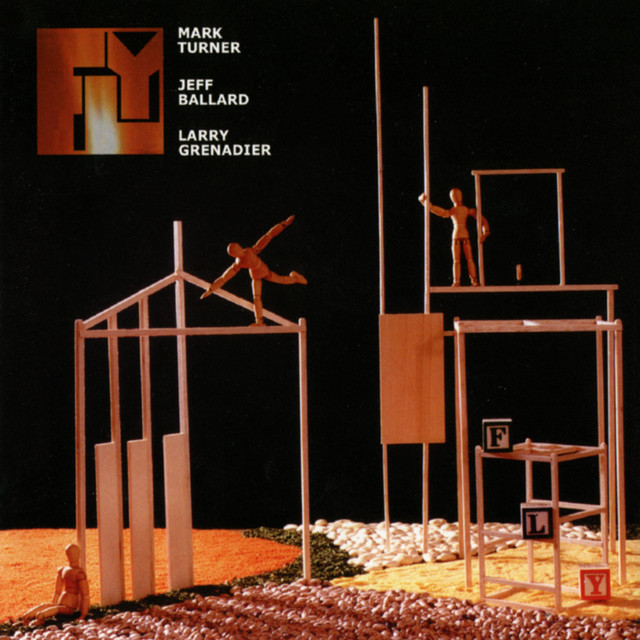
Whenever I started drafting this email (a while ago), I was getting back into this Fly album. Jeff Ballard is an awesome jazz drummer, and I love this trio. Sometimes I wish it was just drums and bass, but the sax is nice too. This track is a Jimi Hendrix cover, and it'll give you a nice idea of this funky trio's sound.
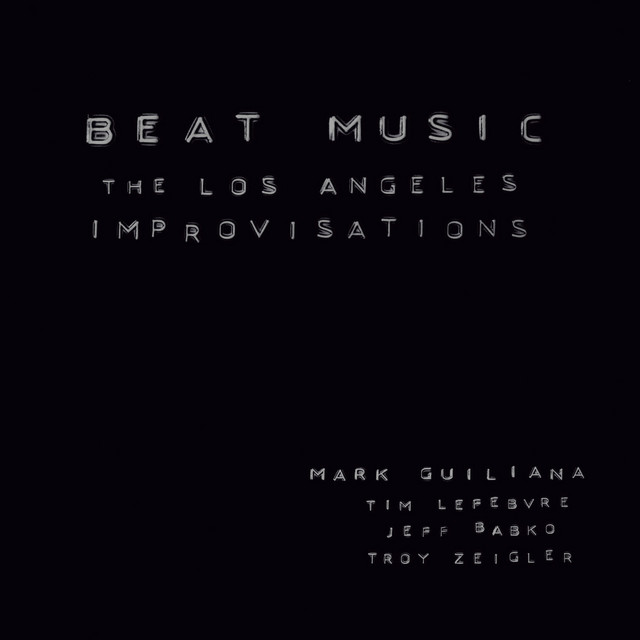
We rarely go to concerts post-pandemic, and especially not now since I need to be very frugal as a newb in the freelance world. But, I jumped at the opportunity to see Mark Guiliana with his Beat Music band. Mark is one of my favorite drummers of all-time. He's a sick jazz drummer, and his fusion game is strong. He brings this Michael Jordan energy/essence to every single beat he plays. I'm sure many people don't know this, but Mark played drums on David Bowie's final album (Blackstar), which came out just before he passed away. Bowie knew how legit Mark is and clearly wanted one of the best for his final album. If you like what you hear from Bang Biscuit, I encourage you to check out more of his albums, and also some of the albums he's drummed on for other artists.
GOOD TIGER
A new Good Tiger album dropped recently, and once again, the drums and guitars are dope. since Good Tiger has quickly become one of my favorite rock bands since I initially discovered them a few years ago. The songs on their new album aren't quite as hooky as their previous albums, but it's still fantastic and it's growing on me. It also inspired me to share one of my favorite tracks on each of their albums.
This song is a BANGER from their first album, A Head Full of Moonlight. It rocks hard from the very first beat till the end, and the chorus hits this half time groove with the hookiest vocal melody. Pure gold!
On this album, they brought in a new drummer and you can barely tell. I have probably listened to this song more than any other Good Tiger song. I lovvvve it! I get so amped every time I hear it...and the ending goes soooo hard, it damn near brings me to tears of rock 'n' roll joy. I also have fond memories of biking across town to KeyForge nights at my FLGS (friendly local game store), smiling and listening to this.
Here's a track on their brand new album that I've been diggin' quite a bit.
I have a lot of fun projects on my plate, which I'm excited about. Of course, I'm still trying to get faster with finishing and posting all of my Kickin' It Creative content ideas. It's challenging because the less I finish and share, the longer it takes me to finish projects. I need to get comfortable being a little more loosey goosey because done is better than perfect.
I appreciate you reading this! Thank you for your ongoing support. Please be sure to subscribe to my YouTube channel and podcast. I have t-shirts, stickers, and other goodies available here, if you're interested in showing your support in style. ...and since I'm not on social media, I'd love it if you're able to share my content with your friends/family who enjoy music and board games. Let's grow this thing together! Thank you!
Thanks for reading Squawk 'N' Roll: Fresh Plays!
Subscribe for free to receive gaming and music updates like this monthly.